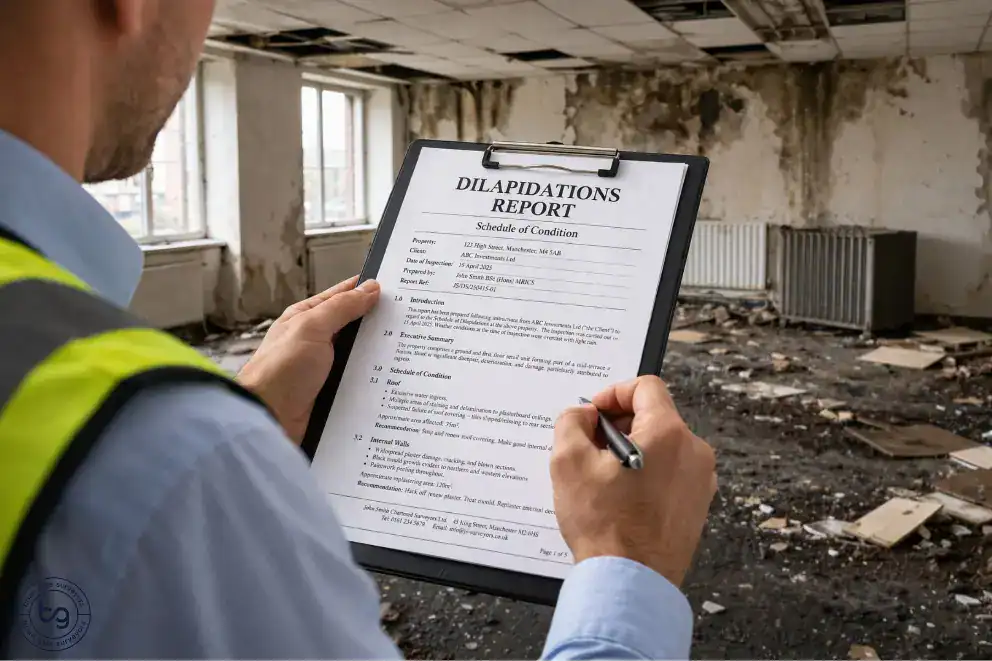
Dilapidations refers to breaches of lease covenants relating to the condition of a commercial property. At or near the end of a lease, a landlord can serve a schedule of dilapidations requiring the tenant to repair, reinstate alterations or compensate for those breaches.
For both landlords and tenants, commercial dilapidations carry real financial consequences. Claims can run into tens of thousands of pounds. Understanding how the process works and where liability arises is essential well before lease expiry.
What Does Dilapidations Mean in a Commercial Lease?
In practice, dilapidations are not limited to obvious physical disrepair.
They may include breaches relating to:
- Repair and maintenance
- Internal and external decoration
- Compliance with statutory requirements
- Reinstatement of alterations
- Removal of tenant fixtures and fittings
- Yielding up the premises in a specified condition
Most commercial leases contain repairing covenants, meaning clauses that set out the tenant’s legal responsibility to keep the property in repair during the lease term. In many cases these are framed as full repairing obligations.
What Is an FRI Lease?
An FRI lease, meaning Full Repairing and Insuring lease, places the repairing and insuring obligations squarely on the tenant.
Under an FRI lease, the tenant is typically responsible for:
- Keeping the premises in repair
- Reinstating alterations unless agreed otherwise
- Contributing to or paying insurance costs
- Returning the property in accordance with the lease terms
Tenants should understand exactly what they are taking on before signing. The lease, not general expectation, determines liability.
Types of Dilapidations Schedule
A schedule of dilapidations is a formal document prepared by a surveyor identifying alleged breaches of lease. There are three main types:
Interim Schedule
Served during the lease term. It highlights breaches requiring attention before expiry. Landlords may use this to prompt compliance while the tenant is still in occupation.
Terminal Schedule
Served at or shortly after lease expiry. This forms the basis of a terminal dilapidations claim and is the most common type encountered.
Anticipated Schedule
Served in advance of a break clause date. It identifies breaches that must be remedied if the tenant wishes to operate the break successfully.
Each type has strategic implications for timing and negotiation.
The Dilapidations Process Explained
The dilapidations process is structured, particularly for terminal claims.
This typically includes:
- Inspection of the premises by a dilapidations surveyor
- Preparation and service of a schedule of dilapidations
- Issue of a quantified demand by the landlord
- Tenant response, often set out in a Scott Schedule
- Negotiation between surveyors
- Settlement or, if necessary, litigation
Terminal claims are governed by the Pre-Action Protocol for Claims for Damages in Relation to the Physical State of Commercial Property at Termination of Tenancy. This is commonly referred to as the Dilapidations Protocol.
Both parties must follow the Protocol. Failure to do so can result in adverse costs consequences if the matter proceeds to court.
What Is a Quantified Demand?
Following service of a terminal schedule, the landlord must issue a quantified demand.
This document sets out the financial loss claimed. It is not simply a contractor’s estimate.
A quantified demand may include:
- The cost of remedial works
- Professional fees
- Loss of rent during the period required to complete works
- Insurance and business rates
- Marketing costs
Importantly, the landlord’s recoverable damages are subject to legal limits.
The Diminution Cap: Section 18 of the Landlord and Tenant Act 1927
One of the most significant constraints on a landlord’s claim is Section 18 of the Landlord and Tenant Act 1927.
This provision, often referred to as the diminution cap, limits damages to the reduction in the property’s value caused by the disrepair.
In simple terms, the landlord cannot automatically recover the full cost of works if those works do not correspond to an equivalent reduction in value.
For example, if the cost of repairs is £80,000 but the actual loss in value to the landlord is £50,000, the recoverable sum may be capped at £50,000.
The Landlord’s Perspective
From a landlord’s standpoint, commercial property dilapidations are about protecting investment value.
Key considerations include:
- Ensuring leases are clearly drafted
- Commissioning a schedule of condition at lease commencement
- Timing service of schedules correctly
- Assessing diminution in value realistically
A properly prepared and agreed schedule of condition appended to the lease is one of the most effective risk management tools.
It records the state of the premises at the start of the tenancy. Where repairing obligations are limited by reference to that schedule, the tenant is not required to put the property into better condition than it was at the outset.
Without such a document, tenants may inherit historic defects.
The Tenant’s Perspective
For tenants, dilapidations liability can come as an unwelcome surprise at lease end.
Practical steps to manage exposure include:
- Reviewing repairing obligations before signing the lease
- Securing a schedule of condition at commencement
- Keeping written records of landlord approvals for alterations
- Carrying out interim repairs during the term
- Planning exit strategy 12-18 months before lease expiry
Early planning significantly reduces risk. Leaving all works until after lease end weakens negotiating position and can increase claimed loss of rent.
Tenants have the right to challenge a dilapidations claim. A specialist surveyor can review the schedule, assess compliance with lease terms and consider the application of the diminution cap.
How Much Do Dilapidations Cost?
Costs vary widely depending on:
- Property size and type
- Length of lease
- Standard of repair required
- Whether alterations were undertaken
Claims frequently reach tens of thousands of pounds. In larger industrial or office premises, exposure can be considerably higher.
The earlier professional advice is sought, the greater the opportunity to manage cost.
How Can a Tenant Reduce Dilapidations Liability?
Reducing exposure is primarily about preparation and documentation.
Effective measures include:
- Agreeing a detailed schedule of condition at lease commencement
- Limiting repairing covenants where possible
- Understanding reinstatement clauses
- Commissioning a pre-expiry assessment 12-18 months before lease end
- Undertaking cost-effective works before vacating
Proactive management is almost always more economical than reactive negotiation.
The Role of a Dilapidations Surveyor
A dilapidations surveyor acts as technical adviser and negotiator.
For landlords, this may involve:
- Inspecting and preparing schedules of dilapidations
- Drafting quantified demands in accordance with the Protocol
- Advising on diminution
- Negotiating settlement
For tenants, it may include:
- Reviewing the lease
- Responding to schedules
- Preparing Scott Schedules
- Advising on strategy and likely exposure
- Negotiating to minimise liability
Where disputes escalate, surveyors may also assist with expert witness reports.
Brian Gale Surveyors act for both landlords and tenants in dilapidations disputes across Surrey and Sussex. Advice is tailored to the specific lease terms and property condition.
When Should You Seek Advice?
The most effective time to seek advice is not when the schedule arrives.
Ideally, landlords and tenants should take professional advice:
- Before entering into a new lease
- When negotiating break clauses
- Around 12-18 months before lease expiry
Early assessment allows time to plan, budget and negotiate from a position of knowledge.
Protecting Your Position in a Dilapidations Claim
Commercial dilapidations are not simply about broken fixtures or cosmetic decoration. They are about compliance with lease covenants and the financial consequences of breach.
For landlords, the objective is to protect asset value within the limits of the law. For tenants, it is to understand obligations clearly and manage liability responsibly.
With claims often substantial, informed advice makes a material difference. If you require guidance on a schedule of dilapidations, quantified demand or lease obligations, please contact us.
Clarity at the right stage of a lease can prevent costly surprises later.
Frequently Asked Questions
What does dilapidations mean in a commercial lease?
It refers to breaches of lease covenants relating to the physical state and condition of the premises, including repair, decoration, reinstatement and compliance obligations.
Who pays for dilapidations, landlord or tenant?
Liability depends on the lease. Under an FRI lease, the tenant usually bears repairing and insuring obligations, subject to statutory limits such as the diminution cap.
When is a schedule of dilapidations served?
It may be served during the lease as an interim schedule, before a break date as an anticipated schedule or at lease end as a terminal schedule.
What is the Pre-Action Protocol for dilapidations?
It is the formal procedure governing terminal claims for damages relating to the physical state of commercial property at lease termination. Both parties must comply.
How can a tenant dispute a dilapidations claim?
By instructing a specialist surveyor to review the lease, assess the alleged breaches and negotiate based on evidence and statutory limits such as Section 18 of the Landlord and Tenant Act 1927.