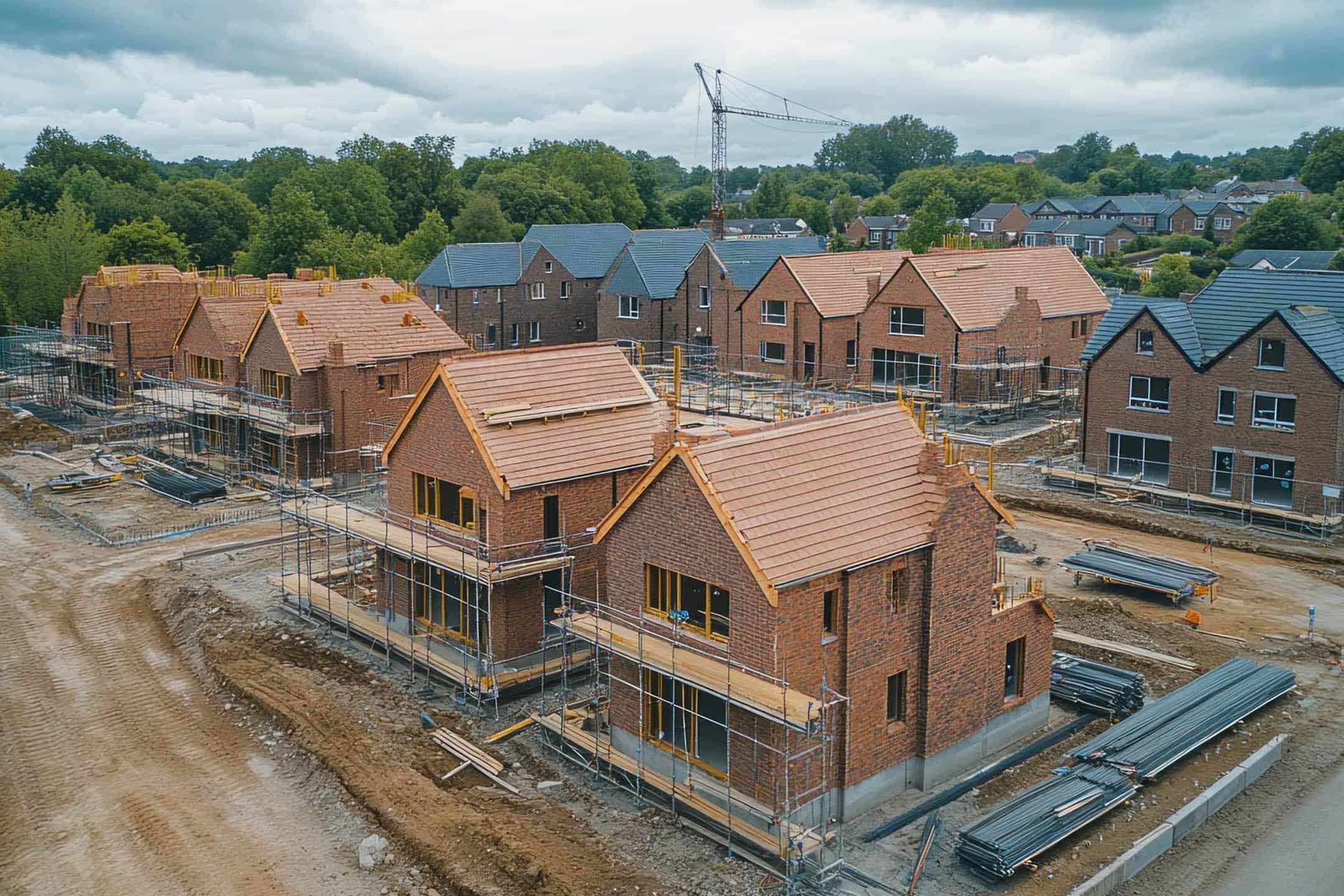
Buying a brand new home brings a sense of reassurance. Fresh paintwork, unused fittings and modern construction standards all suggest a property that should be free from problems.
Because of this, many buyers assume that arranging a survey on a new build simply is not necessary. After all, the property has just been completed and comes with a developer’s warranty.
However, while most new homes are built to good standards, new does not automatically mean perfect. A new build survey is not about expecting major defects. It is about clarity, reassurance and protecting what is likely to be one of the largest investments you will ever make.
Why Many Buyers Skip a Survey on a New Build
It is common for buyers to feel confident proceeding without a residential survey on a new build property.
This is often because:
- The property has never been lived in
- A 10-year structural warranty is provided
- A mortgage valuation is being carried out
- Completion deadlines can feel tight
One of the most frequent misunderstandings relates to the lender’s valuation.
A mortgage valuation is undertaken for the lender’s benefit. Its purpose is to confirm that the property provides adequate security for the loan. It is not a detailed inspection of the condition of the home and should not be confused with a home survey.
A residential survey, by contrast, is carried out independently for you as the buyer. Its role is to assess the visible condition of the property and identify any issues that may require attention.
Can New Build Homes Have Problems?
Most new build homes in the UK are constructed under building regulations and inspected at key stages. That provides a significant level of oversight.
However, building a home involves many trades working to tight programmes. Even on well-managed developments, defects can arise.
Snagging Issues (Common and Usually Minor)
The most common issues in new homes are known as snagging items.
A snagging survey identifies minor defects, unfinished details or workmanship concerns that should be rectified by the developer.
Examples may include:
- Paintwork imperfections
- Doors that do not close properly
- Poorly fitted kitchen units
- Loose or cracked tiles
- Gaps in sealant around baths or showers
- Uneven flooring
These are typically minor and usually straightforward to correct. However, identifying them early helps ensure they are addressed promptly.
More Significant Issues (Less Common)
More substantial concerns are less common but can occur. These might include:
- Drainage installed incorrectly
- Roofing defects
- Insulation not fitted properly
- Ventilation systems that are not functioning as intended
Serious structural defects are uncommon in modern new builds, but early identification of any issue is always preferable.
What Is a Snagging Survey?
A snagging survey is specifically designed for newly constructed homes.
It is usually carried out shortly before legal completion, or soon after you move in during the developer’s initial defect period.
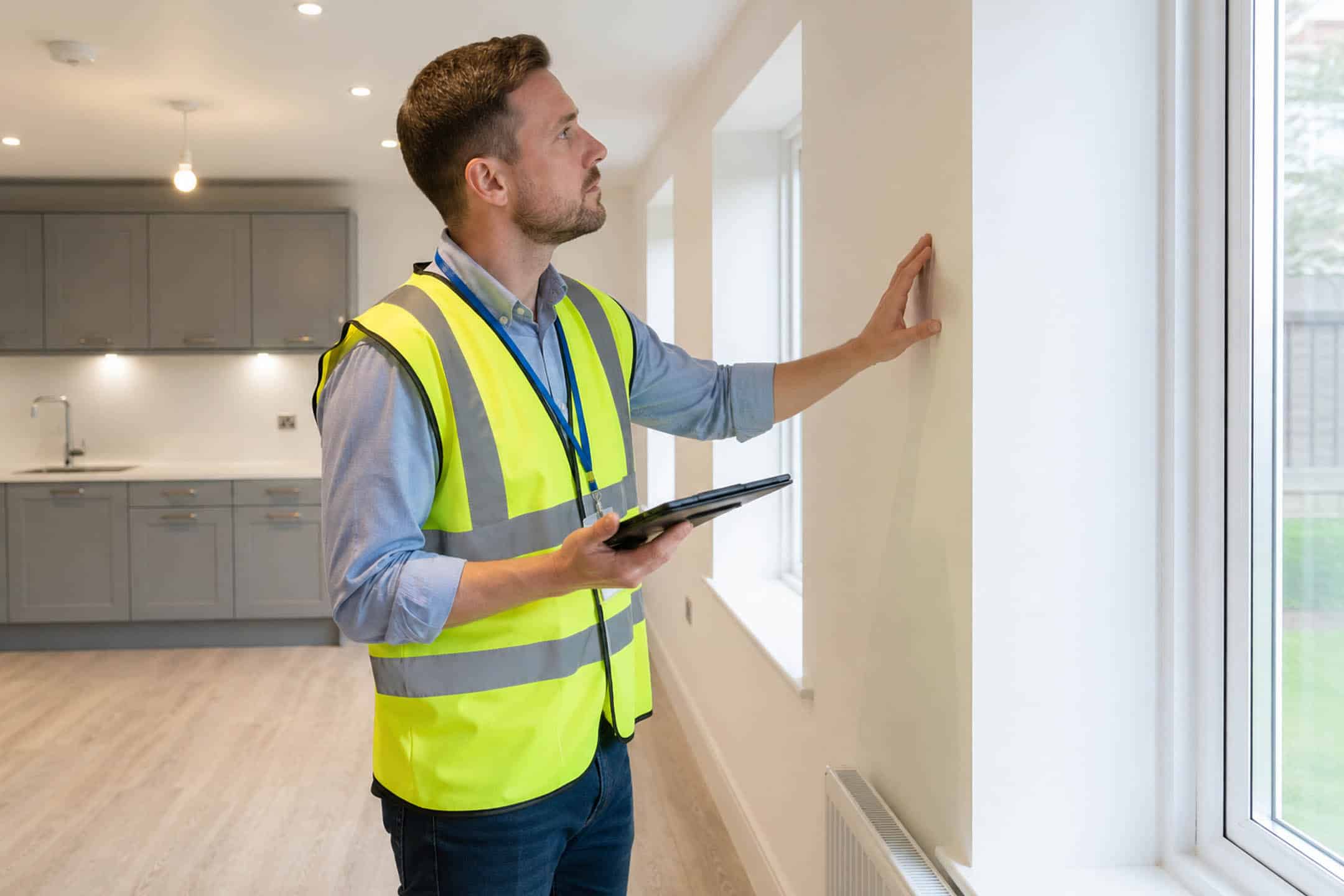
The surveyor inspects the property and provides a detailed written report listing visible defects or incomplete items. This report can then be submitted to the developer so that the issues can be rectified.
A snagging survey focuses primarily on workmanship and finishing standards. It differs from a broader new build property survey, which may also consider the general quality of construction and visible compliance with expected standards.
What Does a New Build Property Survey Cover?
A new build property survey involves a visual inspection of the accessible areas of the home.
The surveyor will typically assess:
- External walls, brickwork and pointing
- Roof coverings (from accessible viewpoints)
- Windows and external doors
- Loft space, where accessible
- Internal walls and ceilings
- Floors and finishes
- Kitchens and bathrooms
- Visible plumbing and heating components
- Ventilation systems
The inspection is non-invasive. It does not involve removing finishes or lifting floors, but it does involve a trained and experienced assessment of visible workmanship and installation quality.
For many buyers, this independent review provides valuable reassurance before completing the purchase.
Is the Developer’s Warranty Enough?
Most new build homes are sold with a 10-year structural warranty.
In general terms, during the first two years after completion, the developer is responsible for putting right defects and issues that arise. After this initial period, the warranty provider typically covers major structural problems for the remainder of the ten-year term.
This protection is helpful and important. However, it is essential to understand that warranties usually focus on structural matters. Cosmetic defects and minor workmanship issues may not be covered unless they are identified and reported early.
A new build survey helps ensure that visible defects are recorded while the developer’s responsibility is clear, making it easier to have issues resolved.
Are Surveys Different for New Build Flats?
If you are purchasing a new build flat, there are additional factors to consider.
Flats often involve:
- Shared communal areas
- Roof structures that are not directly accessible
- Mechanical ventilation systems
- Lifts and shared services
While you may not be responsible for every shared element, a residential survey can still assess the internal condition of your flat, the quality of visible workmanship and any obvious concerns within your own demise.
This can be particularly useful if you are buying off-plan or have had limited opportunity to inspect the completed property yourself.
Should You Choose a RICS Level 2 Home Survey for a New Build?
For many standard new build houses or flats, a full structural building survey is not necessary.
Instead, a RICS Level 2 Home Survey (previously known as a HomeBuyer Report) may be appropriate, depending on the property and your circumstances.
A RICS (Royal Institution of Chartered Surveyors) Survey provides:
- A visual inspection of the property
- Clear explanations of any defects
- A traffic light system highlighting areas of concern
- Advice on repairs or further investigations where required
In some situations, a focused snagging survey may be sufficient. In others, particularly if the property is unusual, heavily customised or architect-designed, a more detailed survey may be sensible.
Selecting the right type of home survey should be based on the individual property rather than a one-size-fits-all approach.
When Is a Survey on a New Build Most Worthwhile?
Arranging a survey on a new build can be particularly worthwhile if:
- You are a first-time buyer
- The development is large and built in phases
- The property is high in value
- You have not been able to visit regularly during construction
- You are purchasing off-plan
In these circumstances, an independent inspection can provide an additional layer of reassurance at an important stage.
What Are the Risks of Not Having a Survey?
Choosing not to arrange a new build survey does not mean that problems will occur. Many buyers move into new homes without difficulty.
However, potential risks include:
- Missing defects before completion
- Reduced negotiating position when requesting repairs
- Delays in having issues addressed
- Minor defects becoming ongoing frustrations
The cost of a residential survey is relatively modest when compared with the overall purchase price. For many buyers, the reassurance it brings makes it worthwhile.
A New Build Survey Is About Reassurance, Not Expecting the Worst
A newly built home should offer modern construction standards, improved energy efficiency and lower maintenance. However, no building project is entirely immune from minor defects or workmanship issues.
A new build property survey, whether in the form of a snagging survey or a RICS Level 2 Home Survey, provides independent clarity at a significant financial moment. It allows you to move forward knowing that an experienced professional has assessed the visible condition of your new home.
If you are purchasing a new build house or flat in Surrey and would like clear, independent advice, please get in touch with our team. We can carry out a thorough new build survey and provide practical guidance before you complete your purchase.